
If you're unhappy with stains or discoloration on your teeth, you're certainly not alone. Teeth naturally become less bright over time, and foods, beverages, tobacco use, and the aging process can all contribute to changes in tooth color.
Fortunately, there are several ways to brighten your smile. Professional teeth whitening and do-it-yourself (DIY) at-home whitening products are two common options, but they aren't exactly the same.
Understanding how each approach works, what results you can expect, and when to talk with your dentist can help you decide which option may be appropriate for your smile.
What Is Professional Teeth Whitening?
Professional teeth whitening is performed or prescribed by a dental professional using whitening products designed specifically for dental use.
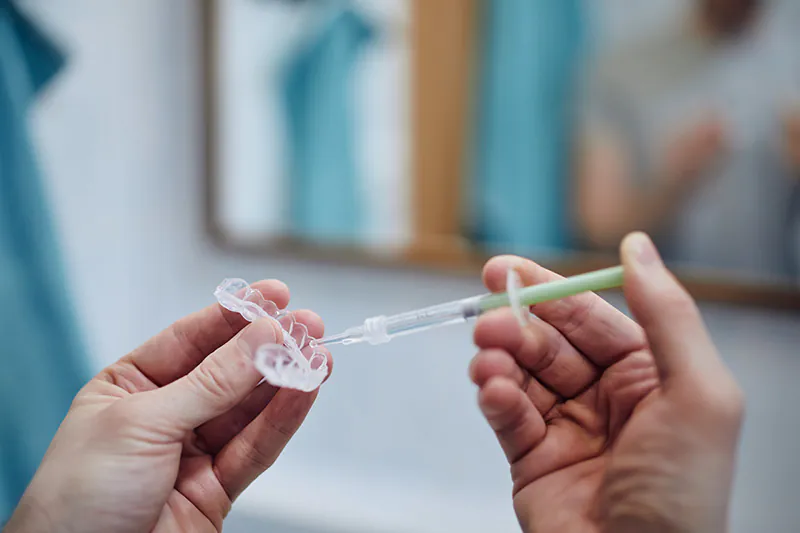
Depending on the treatment, professional whitening may take place in the dental office or involve customized whitening trays that you use at home according to your dentist's instructions.
Professional whitening products generally contain peroxide-based bleaching agents, such as hydrogen peroxide or carbamide peroxide. These ingredients penetrate the tooth's enamel and help break down compounds responsible for discoloration.
Before recommending whitening, your dentist can also evaluate your teeth and gums to determine whether you're a good candidate and whether any dental concerns should be addressed first.
What Is DIY At-Home Whitening?
DIY whitening refers to products you purchase and use yourself without direct supervision from a dental professional. These may include:
- Whitening strips
- Whitening gels
- Whitening trays
- Whitening toothpaste
- Whitening pens
- Other over-the-counter whitening products
The strength and formulation of these products can vary. Some products use peroxide to bleach tooth discoloration, while whitening toothpastes typically rely primarily on mild abrasives to help remove surface stains rather than changing the internal color of the tooth.
Because you're applying these products yourself, it's important to follow the manufacturer's instructions carefully. Using a product more frequently or for longer than directed won't necessarily produce better results and can increase the likelihood of tooth sensitivity or gum irritation.
Which Whitening System Is More Effective?
The effectiveness of whitening depends on several factors, including the type and severity of discoloration, the product being used, and how consistently it is used.
Professional teeth whitening generally provides a more controlled approach because your dentist can select an appropriate treatment and provide instructions based on your individual smile. Depending on the method, professional treatment may also use a higher concentration of whitening ingredients than some over-the-counter products.
DIY products can still be effective, particularly for mild surface staining. However, results can vary considerably between products and individuals.
It's also important to understand that whitening doesn't work equally well on every type of discoloration.
Does Whitening Work on Dental Crowns, Veneers, and Fillings?
Whitening treatments work on natural tooth structure. They do not bleach the color of dental restorations such as crowns, veneers, or tooth-colored fillings.
If you have visible restorations and are considering whitening, talk with your dentist first. Whitening your natural teeth could create a difference between the color of your teeth and the existing restoration.
Your dentist can help you determine the best approach for achieving a more consistent-looking smile.
What About Tooth Sensitivity?
Temporary tooth sensitivity is one of the most common side effects associated with whitening.
Some people are more prone to sensitivity than others, particularly those who already have sensitive teeth, enamel erosion, gum recession, or other dental concerns.
Professional whitening allows your dentist to consider these factors before treatment and provide recommendations for minimizing discomfort when appropriate. If you experience significant or persistent sensitivity while using an at-home whitening product, discontinue use and contact your dentist for guidance.
Why See Your Dentist Before Whitening?
Before you start any whitening treatment, it's a good idea to make sure your teeth and gums are healthy.
A dental examination can identify concerns such as:
- Untreated cavities
- Cracked or damaged teeth
- Gum disease
- Significant enamel wear
- Gum recession
- Existing dental restorations
- Discoloration that may not respond well to traditional whitening
In some cases, discoloration can also be related to factors that whitening alone won't correct. Your dentist can help determine what's causing the change in tooth shade and discuss appropriate treatment options.
Which Whitening Option Is Right for You?
There's no single whitening treatment that's right for everyone.
Professional whitening may be a good choice if you want a more personalized treatment plan and predictable guidance from your dental team. At-home products may be appropriate for some people who have mild staining and prefer a more gradual approach.
The best way to determine which option makes sense for you is to talk with your dentist. They can evaluate your smile, discuss your goals, and help you understand what kind of results you can realistically expect.
Get a Brighter Smile With a Personalized Whitening Plan
A brighter smile can boost your confidence, but whitening should always start with healthy teeth and gums.
If you're considering professional teeth whitening or aren't sure whether an at-home product is right for you, Alex Martin, DDS, can help you explore your options. Schedule a consultation to learn more about safely brightening your natural smile and finding an approach that fits your dental needs.
